
The house
The passage, the board and the courtyard
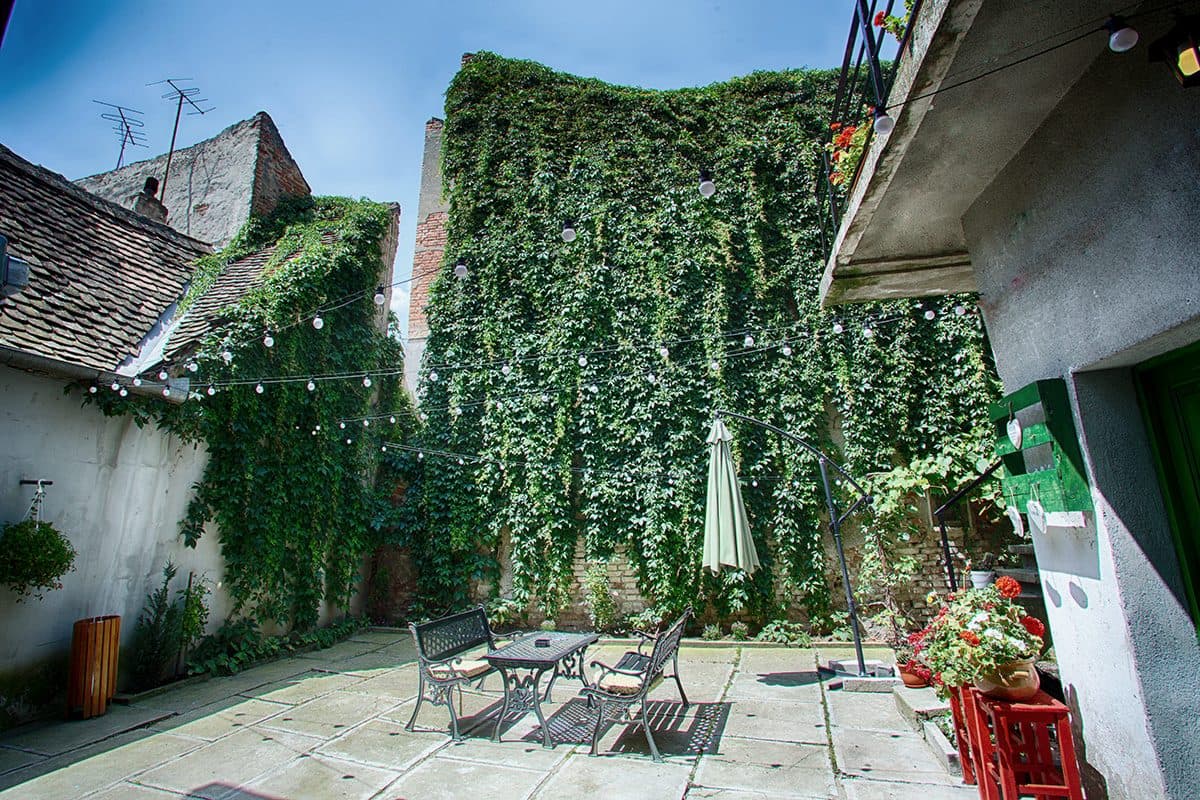
A wooden gate on a cobbled street, a vaulted passage that does the work of a lounge, and a closed courtyard with a wall of vine the full height of the house.
The board
Welcome, written by hand
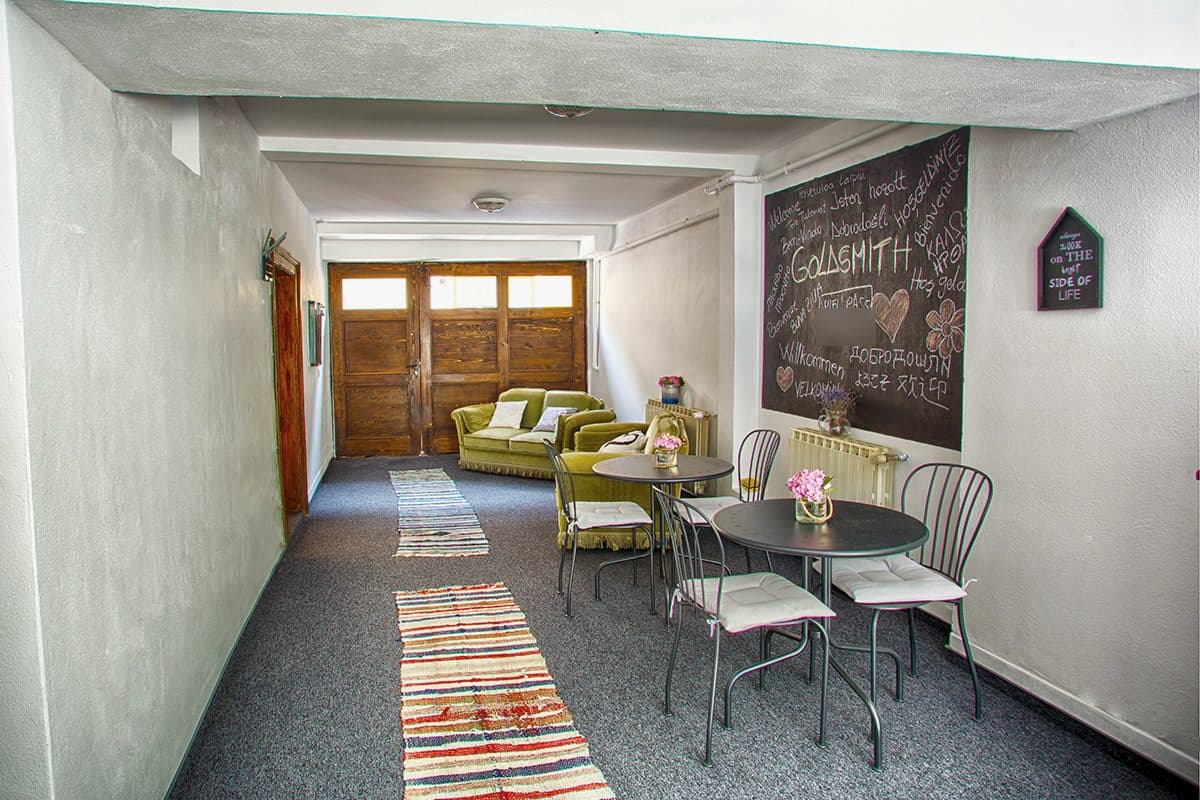
A writing board hangs on the wall of the passage. Chalked on it are the name of the house and the word for welcome in some eighteen languages — Finnish, Estonian, Hungarian, Portuguese, Croatian, Turkish, Spanish, French, German, Danish, Russian, Ukrainian, Serbian, Greek, Hebrew, Georgian — along with a few hearts and a flower.
It isn't decoration. In front of it stand the tables and sofas guests actually sit at, and the board gets rewritten. It explains, better than any paragraph could, what kind of house this is: four rooms on a side street that people from everywhere end up in.
The front page of this site is the board.
- Welcome
- Tervetuloa
- Isten hozott
- Tere tulemast
- Bem-vindo
- Dobrodošli
- Hoşgeldiniz
- Bienvenido
- Ласкаво просимо
- Hoş geldin
- Bienvenue
- Bine ați venit
- Добро пожаловать
- Willkommen
- Velkommen
- Добродошли
Common spaces
What else is in the house
The inner courtyard
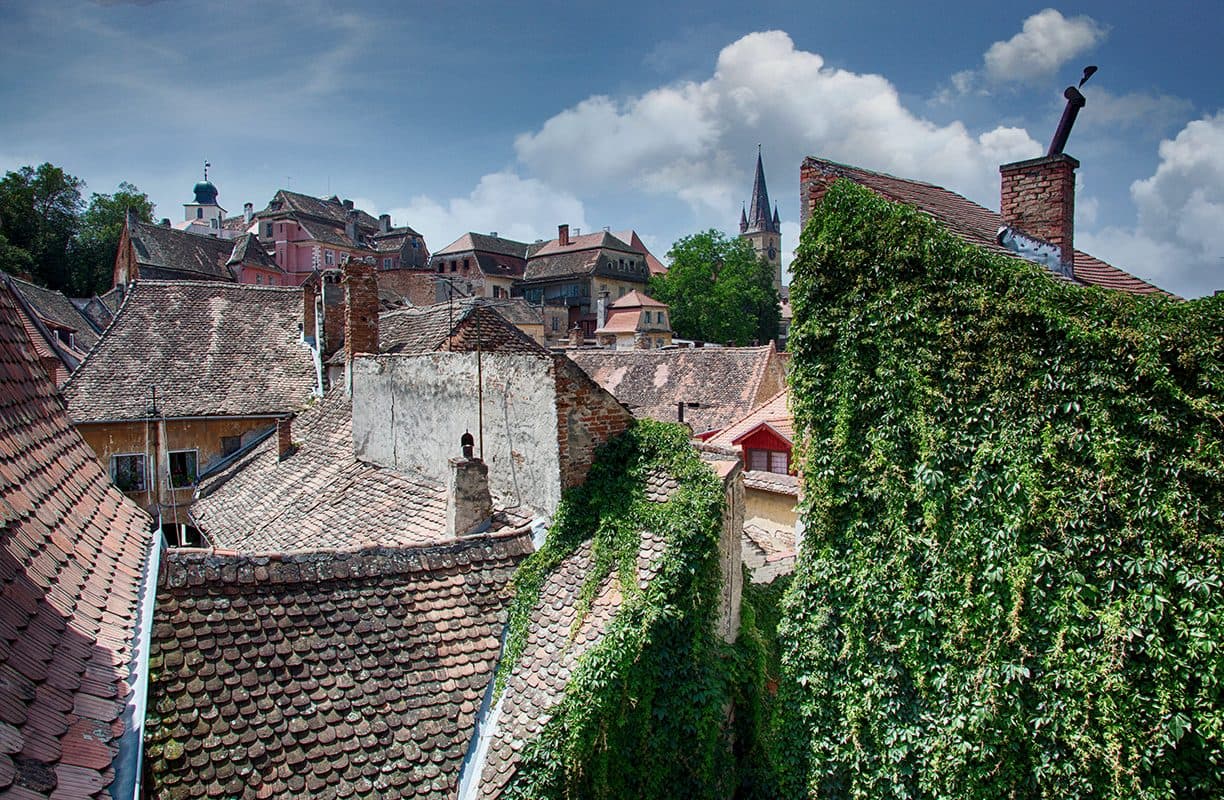
A closed, flagstoned courtyard, bounded by a wall covered from top to bottom in wild vine, the full height of the house. Strings of bulbs cross it. The property calls it “împrejmuită de viță de vie sălbatică” — enclosed by wild vine — and writes on its own gallery page: “În zilele însorite vă așteptăm pe terasă.” (“On sunny days we'll be waiting for you on the terrace.”) In summer the wall is green; in autumn the whole of it turns red.
The terrace
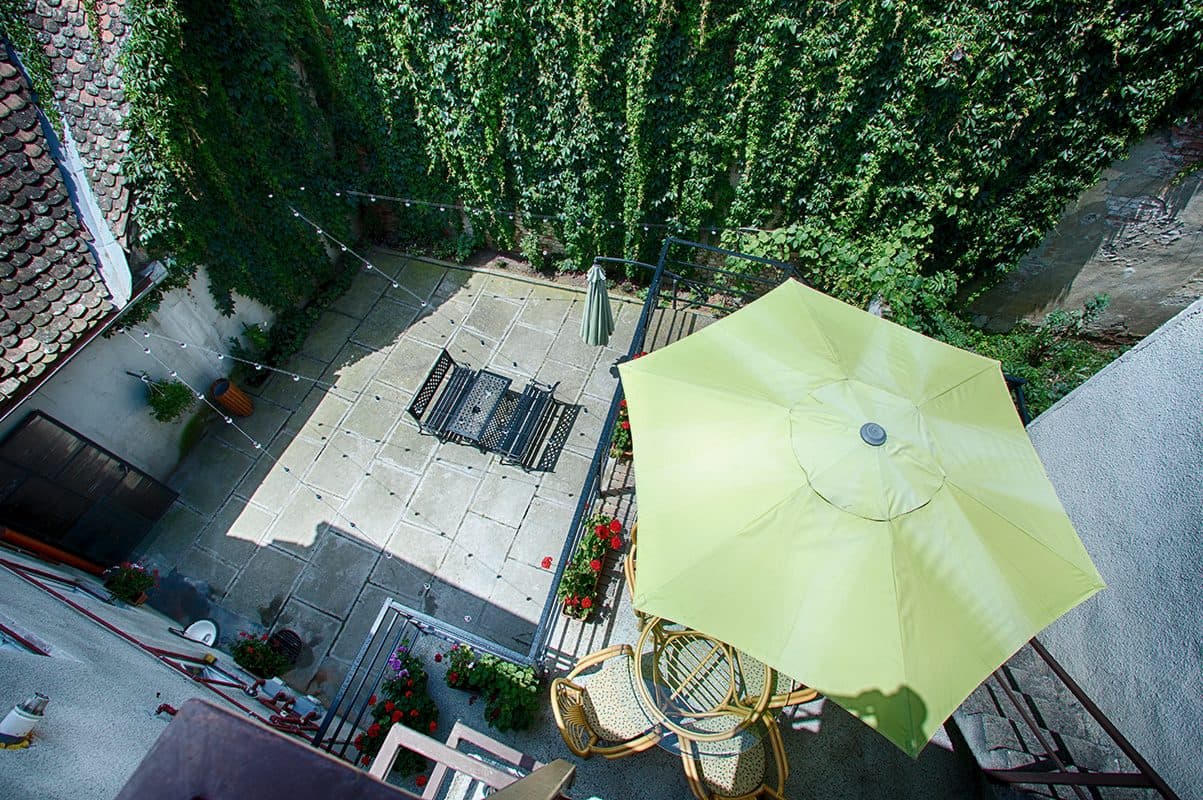
Courtyard furniture, tables and chairs. Guests use it for coffee in the morning and in the evening. After the location, it is the thing reviews mention most.
The lounge in the passage
The vaulted passage between the gate and the courtyard does the work of a common room: sofas, bistro tables, woven runners and the writing board on the wall. This is where breakfast was served during the period it was offered.
The corridor
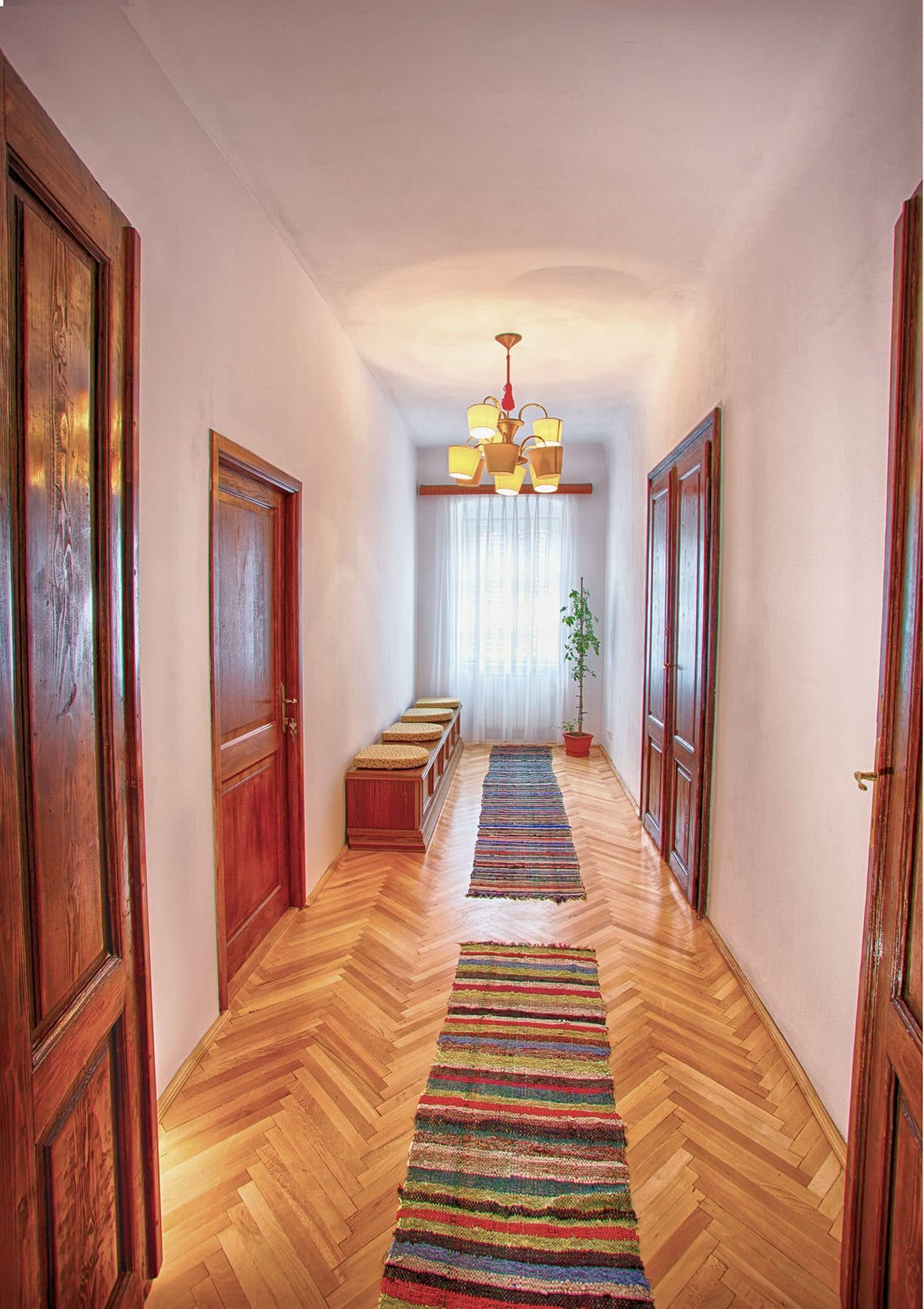
Herringbone parquet, tall red-brown double doors, and woven runners the whole length of it.
The name
Why Goldsmith
The property writes on its own website that the house takes its name from Piața Aurarilor — the Goldsmiths' Square — a few metres away.
The square really is about fifty metres away, round the corner. Its Romanian name is relatively recent: it has only been called Piața Aurarilor since 1970.
Before that it carried a German name tied to the same trade. The city's records list it in 1496 as “beim Fingerligsbrunnen” — at the ring fountain — in 1637 as “Unter der Fingerlingstreppe”, and from 1872 as “Fingerlingsplatz”. The fountain that gave it the name is documented in 1496 too, in front of the house at number 9.
Sibiu's goldsmiths' guild coordinated the union of goldsmiths' guilds across Transylvania. The guild house still stands, at Piața Mică 25, and the tower you go down through towards Piața Aurarilor is still called Turnul Scării Aurarilor — the Goldsmiths' Stair Tower.
So the name of the house is an address: the square next door. The goldsmiths' history belongs to that square and to the city.
Listed monuments
- Sibiu's historic centre
- The house stands inside the protected “Centrul istoric” ensemble, a category A historic monument, LMI code SB-II-s-A-12011, dated 13th–20th century.
- The building itself
- It is not listed individually. Its neighbours on the street are: Str. Târgului 3 (15th-century fragments) and Str. Târgului 4A (15th–16th century).
- Piața Aurarilor
- Every house at numbers 1 to 10 is a listed historic monument, dated between 1400 and the 18th century.
- The age of the house
- Not settled. The property's public descriptions have given both the 17th century and the year 1850, and no public record decides between them. What is certain is that the street and the square next to it are medieval.
Gallery
Every photograph of the house
These are photographs of the house, from an earlier shoot. Some of the rooms have been renovated since and no longer look like this.